
Updated: May 2026
Hand, foot and mouth disease looks dramatic, especially when mouth ulcers stop a child from eating. Most children recover, but hydration and school advice matter.
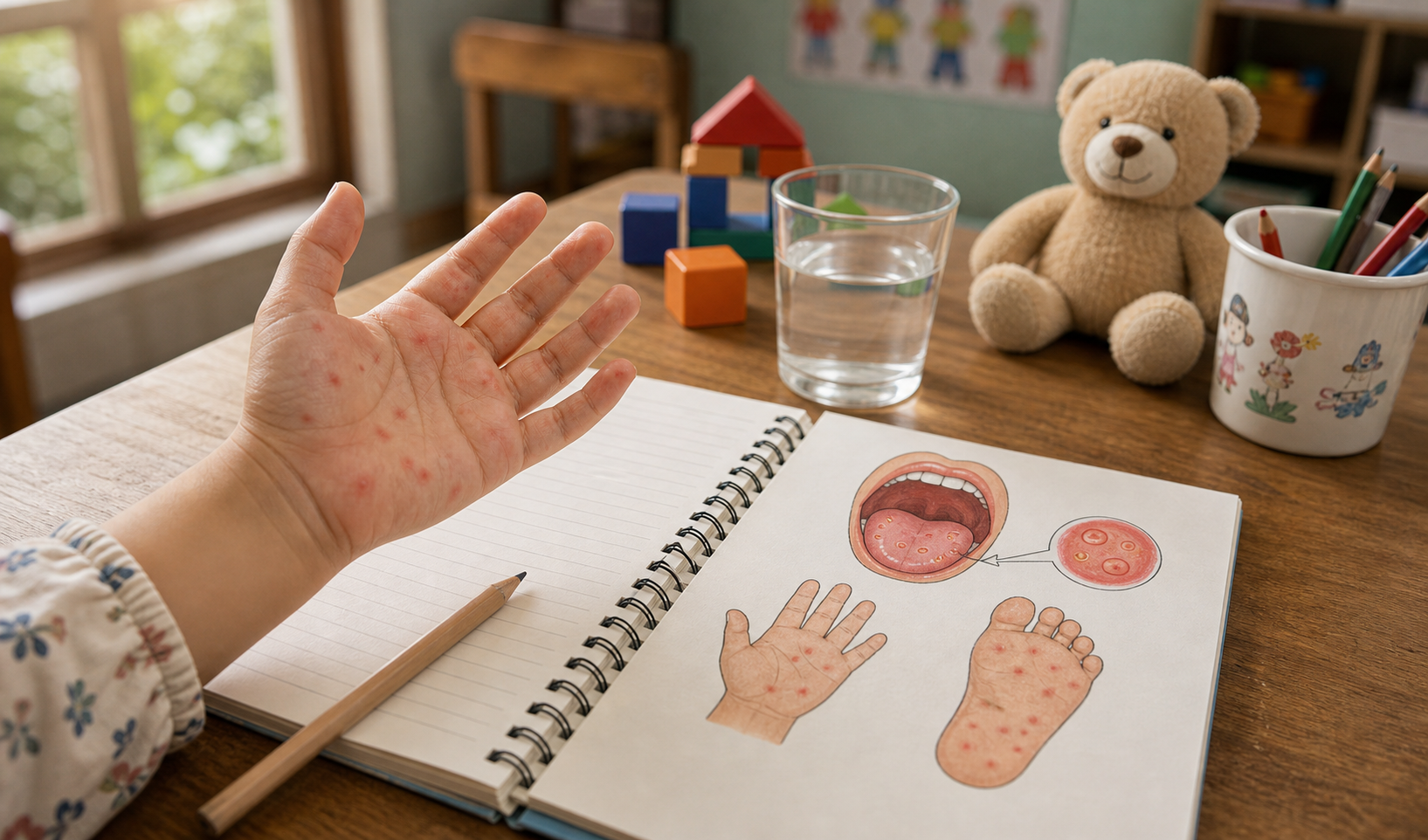
Short answer: Hand, foot and mouth disease is a common viral illness, usually in children under 5 years, causing fever, mouth sores, and rash or blisters on hands, feet, buttocks, or around the mouth. Most recover in 7-10 days.
What Causes It?
HFMD is caused by enteroviruses, commonly coxsackievirus. It spreads through close contact, respiratory droplets, saliva, stool, blister fluid, and contaminated surfaces. This is why it spreads easily in schools, day-care settings, and homes with siblings.
Symptoms
| Feature | What parents may notice |
|---|---|
| Fever | Often first symptom |
| Mouth sores | Pain while eating, drooling, refusal to drink |
| Rash/blisters | Hands, feet, buttocks, knees, elbows, around mouth |
| Irritability | Mostly due to painful mouth ulcers |
| Poor appetite | Usually temporary |
What Treatment Helps?
There is no specific antibiotic treatment because HFMD is viral. Care is supportive.
- Give fluids frequently: water, ORS, milk, soup, or other tolerated fluids.
- Offer soft, cool foods if mouth ulcers hurt.
- Use paracetamol for fever or pain according to weight.
- Avoid spicy, acidic, or very hot foods.
- Maintain handwashing and surface cleaning.
Antibiotics Are Usually Not Needed
Parents often worry when they see blisters and ask for antibiotics. In typical HFMD, antibiotics do not help. They may be needed only if a doctor suspects secondary bacterial infection, which is not the usual case.
When to See a Doctor Urgently
- Child cannot drink or has reduced urine.
- Persistent high fever or worsening after initial improvement.
- Drowsiness, confusion, severe headache, neck stiffness, or seizures.
- Fast breathing, chest indrawing, or bluish lips.
- Baby younger than 6 months with fever or poor feeding.
- Signs of dehydration: dry mouth, sunken eyes, lethargy, very little urine.
School and Day-Care Advice
A child should stay home while feverish, unwell, drooling heavily, or unable to participate. Once the child is fever-free, drinking well, and active, return can be discussed with the school policy and doctor advice.
The tricky part is that children can shed virus in stool for weeks after symptoms improve. Keeping every child home until shedding stops is not practical. Hand hygiene is more realistic.
Prevention at Home
- Wash hands after diaper change/toilet and before food.
- Do not share cups, spoons, towels, or toothbrushes during illness.
- Clean frequently touched surfaces and toys.
- Teach children not to put toys and fingers in the mouth where possible.
My Take
HFMD is usually self-limited, but painful mouth ulcers can make a child dehydrated. Parents should focus less on the rash and more on drinking, urine, alertness, and breathing.
Sources Checked
- CDC: About hand, foot, and mouth disease
- CDC: HFMD signs and symptoms
- Mayo Clinic: HFMD symptoms and causes
No spam. Just a short email when I publish something new.