
Updated: May 2026
Leprosy is curable. The bigger problem is delayed recognition, stigma, and nerve damage that could have been prevented.
Short answer: Leprosy in children should be suspected when a child has a pale or reddish skin patch with reduced sensation, thickened nerves, weakness, numbness, painless wounds, or contact history. Treatment is available and leprosy is curable with multidrug therapy.
Why Leprosy Still Matters in Nepal
Nepal eliminated leprosy as a public health problem nationally in 2010, but that does not mean zero cases. WHO still lists Nepal among countries reporting 1,000-10,000 new cases in 2024 data. Nepal has also continued national work on active case detection, post-exposure prophylaxis, and case-based surveillance.
When leprosy appears in a child, it tells us two things: transmission is still happening somewhere, and the child may have had prolonged exposure, often from an undiagnosed adult case.
Early Signs in Children
| Sign | What to check |
|---|---|
| Pale or reddish patch | Does it have reduced sensation to touch, pain, or temperature? |
| Numbness or tingling | Especially hands, feet, or around a patch |
| Weakness | Difficulty holding slippers, grip weakness, clawing, foot drop |
| Painless wounds or burns | Loss of sensation can hide injury |
| Thickened nerve | Needs trained clinical examination |
The Three Cardinal Signs
WHO describes diagnosis using cardinal signs. A child may have:
- Definite loss of sensation in a pale or reddish skin patch.
- Thickened or enlarged peripheral nerve with sensory loss or muscle weakness.
- Detection of bacilli in slit-skin smear where available.
What Parents Often Mistake It For
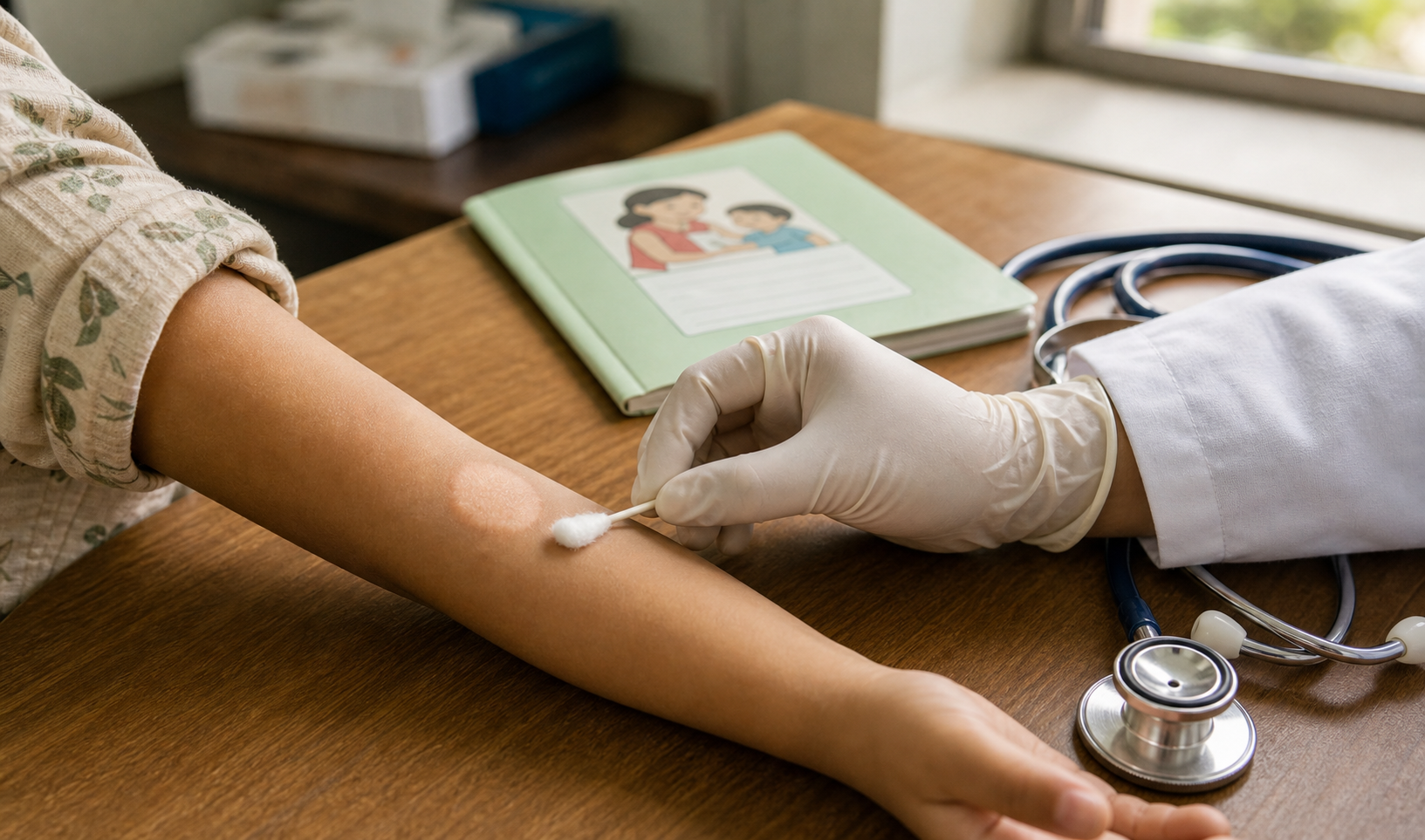
Early leprosy patches may be mistaken for fungal infection, allergy, pityriasis alba, birthmark, eczema, or old injury. The key difference is sensation. A patch that does not feel normal needs proper examination.
Do not apply steroid-mixed creams repeatedly for months without diagnosis. They can change the appearance and delay recognition.
Treatment and Stigma
Leprosy is curable with multidrug therapy. Treatment duration depends on type. Once proper treatment starts, infectivity falls and disability prevention becomes the main goal.
The biggest harm families can do is hide the diagnosis. Stigma delays treatment, increases nerve damage, and allows transmission to continue.
When to Seek Care
- Any numb skin patch.
- Skin patch with weakness, tingling, or burning sensation.
- Child with painless wounds on hands or feet.
- Household contact with known leprosy.
- Progressive hand/foot weakness or deformity.
My Take
Leprosy is not a disease to hide. It is a disease to find early. In children, early diagnosis can prevent lifelong disability.
Sources Checked
- WHO: Leprosy fact sheet
- WHO Nepal: Strengthening National Leprosy Elimination Programme
- WHO Nepal: Nepal NTD strategic roundtable
No spam. Just a short email when I publish something new.