
Updated: May 2026
A child’s weight is not a competition. But poor weight gain can be an early clue that feeding, illness, absorption, infection or family circumstances need attention.
Short answer: One low weight reading is less important than the growth trend. If a child crosses down growth curves, has poor appetite, chronic diarrhea, repeated infections, vomiting, developmental delay or looks wasted, get evaluated.
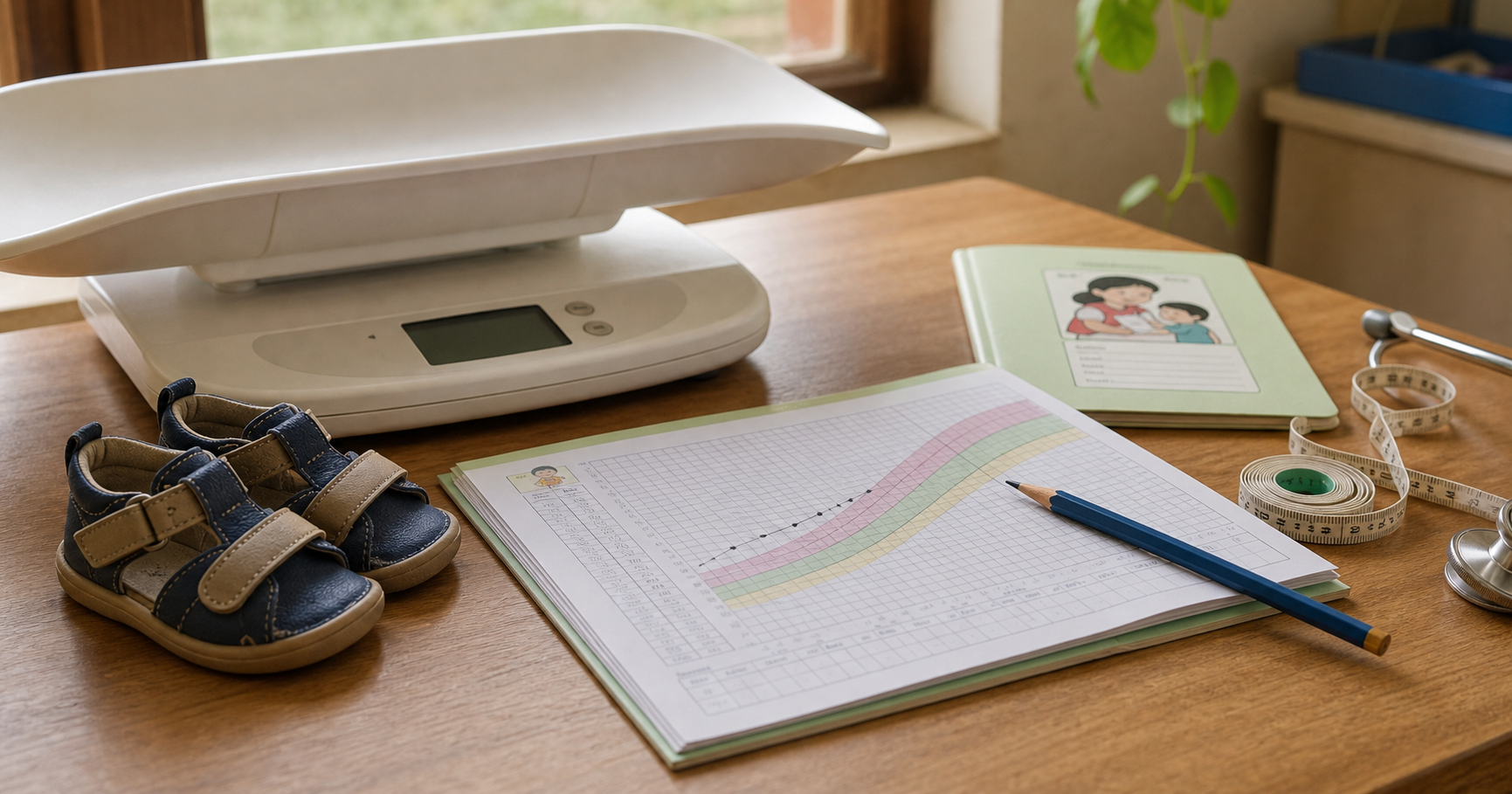
Growth chart first, not guesswork
Parents often compare children with cousins or neighbors. That creates unnecessary anxiety. A better way is to plot weight, length/height and head circumference on an appropriate growth chart and look at the trend.
Some children are naturally small but follow their curve. Others start normal and gradually fall across percentiles. The second pattern is more concerning.
Growth is a movie, not a photograph. One measurement matters less than repeated measurements over time.
Common reasons children do not gain weight
- Not enough calories or protein for age
- Feeding difficulty, picky eating or force-feeding battles
- Incorrect formula preparation
- Delayed complementary feeding after 6 months
- Frequent diarrhea or vomiting
- Worm infestation or chronic infection
- Anemia or micronutrient deficiency
- Heart, kidney, endocrine or gastrointestinal disease
- Prematurity or low birth weight history
- Neglect, poverty or food insecurity
The cause is not always “weakness” or “vitamin deficiency”. A good feeding history is often more useful than ordering many tests immediately.
Red flags: when to see a pediatrician
- Weight falling across growth lines
- No weight gain or weight loss over repeated visits
- Visible wasting or swelling of both feet
- Persistent diarrhea, vomiting or blood in stool
- Chronic cough, fever, night sweats or TB contact
- Breathlessness or sweating during feeds
- Developmental delay or loss of milestones
- Poor feeding in an infant
- Recurrent severe infections
- Very restricted diet or feeding refusal
Infants with poor weight gain should be seen early. Waiting months can make recovery harder.
What the doctor will usually check
- Accurate weight and height/length measurement
- Growth chart plotting
- Birth history and prematurity
- Breastfeeding or formula technique
- Complementary feeding pattern
- Meal frequency and food diversity
- Stool, vomiting and urine history
- Signs of chronic disease or malnutrition
- Development and activity level
- Family height and parental build
Testing depends on the story. Some children need only feeding correction and follow-up. Others need blood tests, stool tests, urine tests, TB evaluation or specialist review.
Practical feeding principles
- Start complementary feeding at 6 months while continuing breastfeeding.
- Add energy-dense local foods: dal, egg, curd, ghee/oil in small amounts, lentils, beans, meat/fish where used, fruits and vegetables.
- Offer meals and snacks at regular times.
- Avoid filling the child with tea, packaged juice, biscuits and noodles.
- Do not turn every meal into a fight. Pressure can worsen feeding refusal.
- Treat illness and follow up weight after recovery.
In Nepal, many children eat enough rice but not enough protein, fat, iron-rich food and dietary diversity. “Pet bharyo” is not the same as “nutrition pugyo”.
FAQ
Should I give appetite syrup?
Do not use appetite medicines casually. First find why the child is not gaining weight. Many appetite syrups are unnecessary and some can cause side effects.
Is a thin child always unhealthy?
No. Some children are lean and active while tracking their growth curve. Worry more about falling growth, weakness, illness signs or developmental concerns.
How often should weight be checked?
It depends on age and severity. Infants and children with poor gain may need closer follow-up than healthy older children.
Final thought
Parents do not need to become doctors. But they do need to know the signs that should not be ignored. If your child looks very sick, breathes with difficulty, becomes drowsy, cannot drink, has persistent vomiting, has convulsions, or you feel something is seriously wrong, seek medical care urgently.
Sources checked while writing this post
This post is for education and general awareness. It does not replace examination by a doctor, especially for infants, children with chronic illness, or any child who appears seriously unwell.
No spam. Just a short email when I publish something new.