
Updated: May 2026
Anemia is common, but that does not make it normal. In children, it can affect activity, learning, growth, and resistance to illness.
Short answer: Anemia means the blood does not have enough healthy red blood cells or hemoglobin to carry oxygen properly. In Nepali children, iron deficiency is common, but worms, chronic infection, poor diet, vitamin deficiency, thalassemia, and other illnesses can also cause anemia.
Symptoms Parents May Notice
- Pale palms, lips, or conjunctiva.
- Tiredness, low playfulness, or poor school attention.
- Poor appetite.
- Breathlessness on exertion.
- Fast heartbeat in severe cases.
- Pica: eating mud, chalk, ice, or unusual substances.
Common Causes in Nepal
| Cause | Clue |
|---|---|
| Iron deficiency | Poor dietary iron, excess milk, poor complementary feeding |
| Worm infection | Abdominal symptoms, pallor, poor growth, hookworm risk |
| Chronic infection/inflammation | Long fever, weight loss, recurrent illness |
| Thalassemia/hemoglobin disorder | Family history, long-standing microcytic anemia not correcting with iron |
| Vitamin deficiency | Poor diet, neurological signs, glossitis, other deficiencies |
Iron-Rich Foods That Fit Nepali Homes
Families do not need expensive supplements as the first food solution. They need regular, realistic meals.
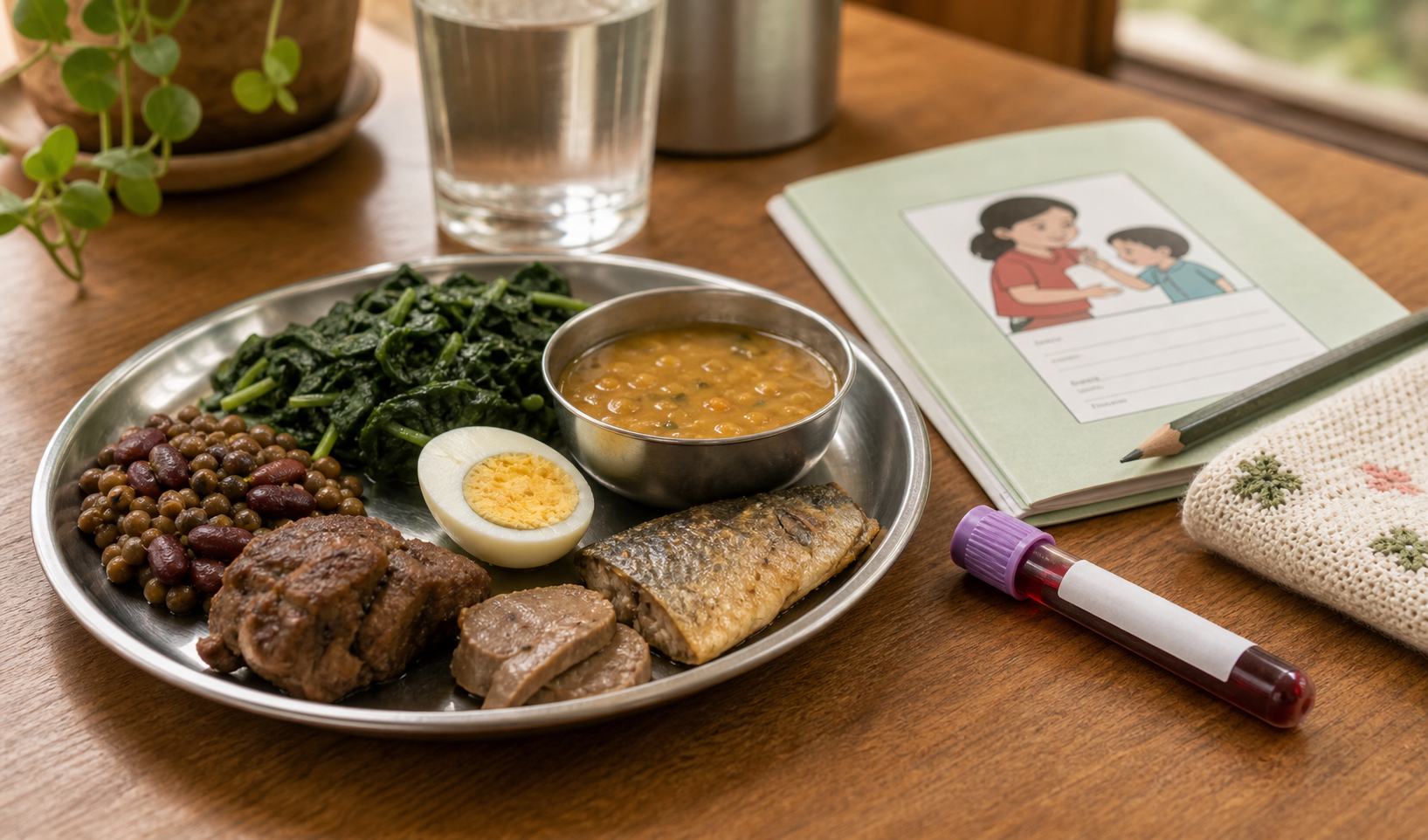
- Egg, meat, fish, chicken, liver where culturally acceptable.
- Lentils, beans, chickpeas, peas, soybeans.
- Green leafy vegetables, though iron absorption is less than meat sources.
- Fortified foods if available.
- Vitamin C foods like lemon, guava, orange, amla, tomato with meals to improve absorption.
Avoid giving tea with meals. Tea can reduce iron absorption. Excess cow’s milk can also worsen iron deficiency by replacing iron-rich foods, especially in toddlers.
When to Test Blood
A CBC is useful when the child has pallor, poor growth, tiredness, recurrent illness, pica, poor diet, worm risk, heavy menstrual bleeding in adolescent girls, or symptoms suggesting severe anemia.
Depending on the CBC, doctors may add ferritin, peripheral smear, reticulocyte count, stool test, CRP, hemoglobin electrophoresis, or other tests.
Treatment: Do Not Guess Forever
If iron deficiency is likely, doctors may prescribe iron for a defined period and recheck response. Hemoglobin should improve with correct treatment and adherence. If it does not, we need to ask why: wrong diagnosis, poor absorption, ongoing blood loss, infection, thalassemia, or poor intake.
Iron can darken stool and may cause constipation or abdominal discomfort. That does not usually mean allergy. Ask your doctor how to adjust timing or formulation.
Danger Signs
- Severe weakness or fainting.
- Breathlessness at rest.
- Fast heartbeat, chest pain, or swelling.
- Very pale child with fever or bleeding.
- Black stool, blood in stool, or heavy menstrual bleeding.
My Take
Anemia should not be treated as “just low blood.” In children, it is a clue. Find the cause, treat it properly, improve diet, deworm when indicated, and follow up.
Sources Checked
No spam. Just a short email when I publish something new.