
Updated: May 2026
Worm infection is common enough in Nepal that families sometimes treat it casually. But heavy or repeated infections can affect nutrition, anemia, abdominal symptoms, and school performance.
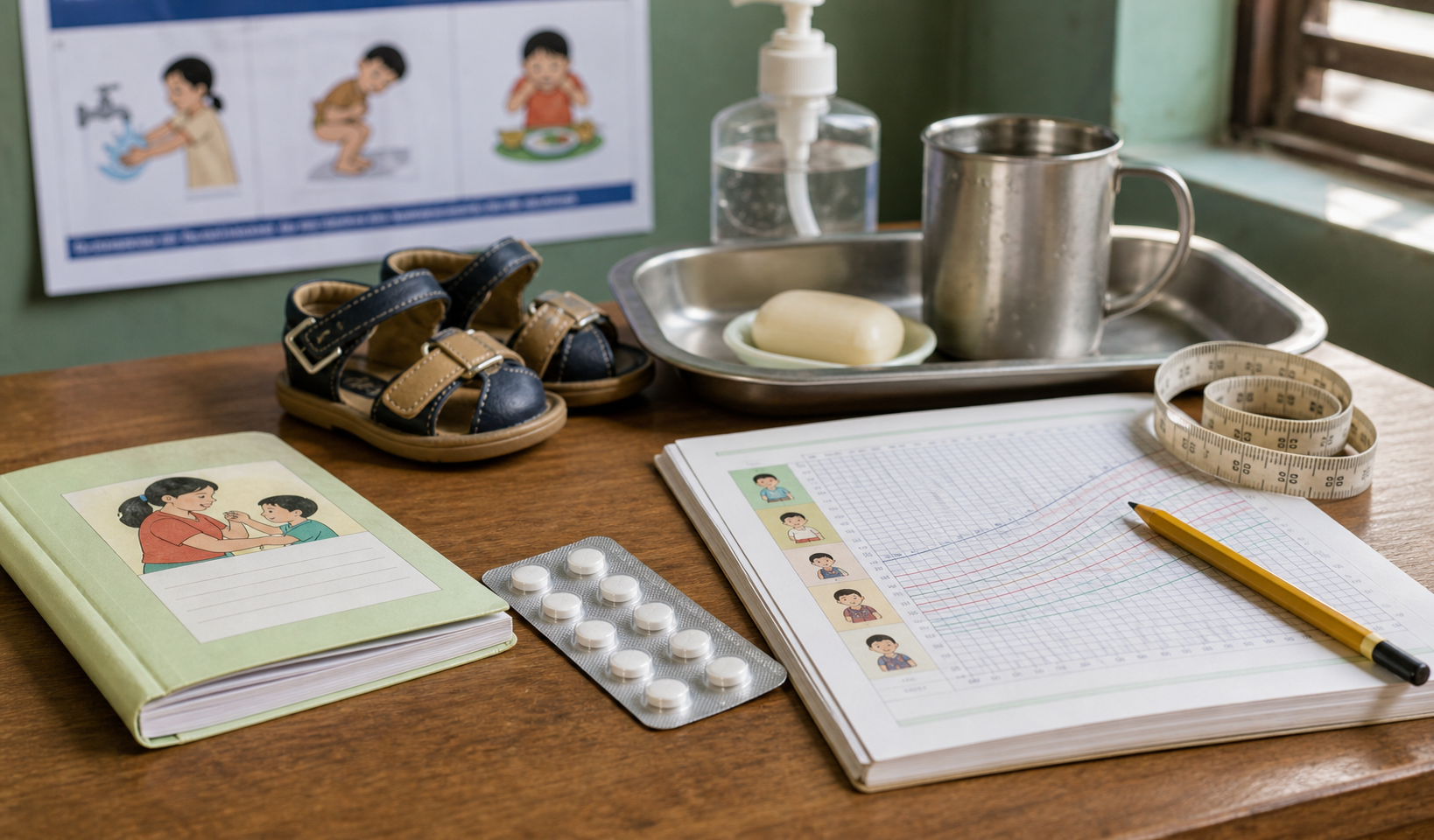
Short answer: Worm infection in children is usually preventable and treatable. Deworming helps, but it works best when combined with handwashing, safe toilets, shoes, clean nails, and safe food and water.
Which Worms Are We Usually Talking About?
The common public health concern is soil-transmitted helminths: roundworm, whipworm, and hookworm. These spread through soil contaminated with human feces. Children are at risk because they play on the ground, put hands in the mouth, and may not wash properly before eating.
Pinworm is different and commonly causes night-time anal itching. Tapeworm and other parasites need separate assessment depending on history and stool findings.
Symptoms in Children
| Possible symptom | What it may mean |
|---|---|
| Abdominal pain, bloating, poor appetite | Common but non-specific |
| Weight faltering or poor growth | Think of nutrition, chronic infection, worms, TB, celiac, other causes |
| Pallor or tiredness | Could be anemia, including hookworm-related blood loss |
| Anal itching at night | Suggests pinworm |
| Visible worm in stool/vomit | Needs treatment and hygiene measures |
Deworming: What Parents Should Know
WHO recommends preventive deworming in children living in areas where soil-transmitted helminth infection is common. Albendazole or mebendazole is commonly used in public health programmes.
In Nepal, deworming is often delivered through child health and school-based activities. Parents should not give repeated random doses every few weeks without advice. If symptoms continue after deworming, the diagnosis may be something else.
When to See a Doctor
- Severe abdominal pain or vomiting.
- Abdominal distension with inability to pass stool or gas.
- Blood in stool.
- Persistent diarrhea or weight loss.
- Severe pallor, weakness, or breathlessness.
- Repeated worms despite treatment.
- Child younger than 1 year needing medication advice.
Prevention That Actually Matters
- Handwashing with soap after toilet and before eating.
- Use toilets; avoid open defecation.
- Trim nails regularly.
- Wash fruits and vegetables properly.
- Use safe drinking water.
- Wear slippers/shoes outside, especially where hookworm is common.
- Treat household clusters when pinworm is suspected, as advised by a clinician.
Worms Are Not the Answer to Every Poor Appetite
Parents often ask for deworming whenever a child is not eating. Sometimes that is correct, but many children eat poorly because of frequent snacks, excess milk, anemia, constipation, chronic illness, poor feeding routine, screen distraction, or normal picky eating.
If the child is growing well, active, and has no red flags, appetite alone may not mean worms. Growth chart matters more than daily food drama.
My Take
Deworming is useful, but sanitation is what prevents reinfection. If the same child keeps getting worms, the family should look at toilets, handwashing, footwear, nails, food hygiene, and school environment.
Sources Checked
- WHO: Soil-transmitted helminth infections
- WHO: Deworming in children
- CDC: Soil-transmitted helminths
No spam. Just a short email when I publish something new.