
Updated: May 2026
Most childhood nosebleeds are not dangerous. The problem is that the first aid is often done wrong.
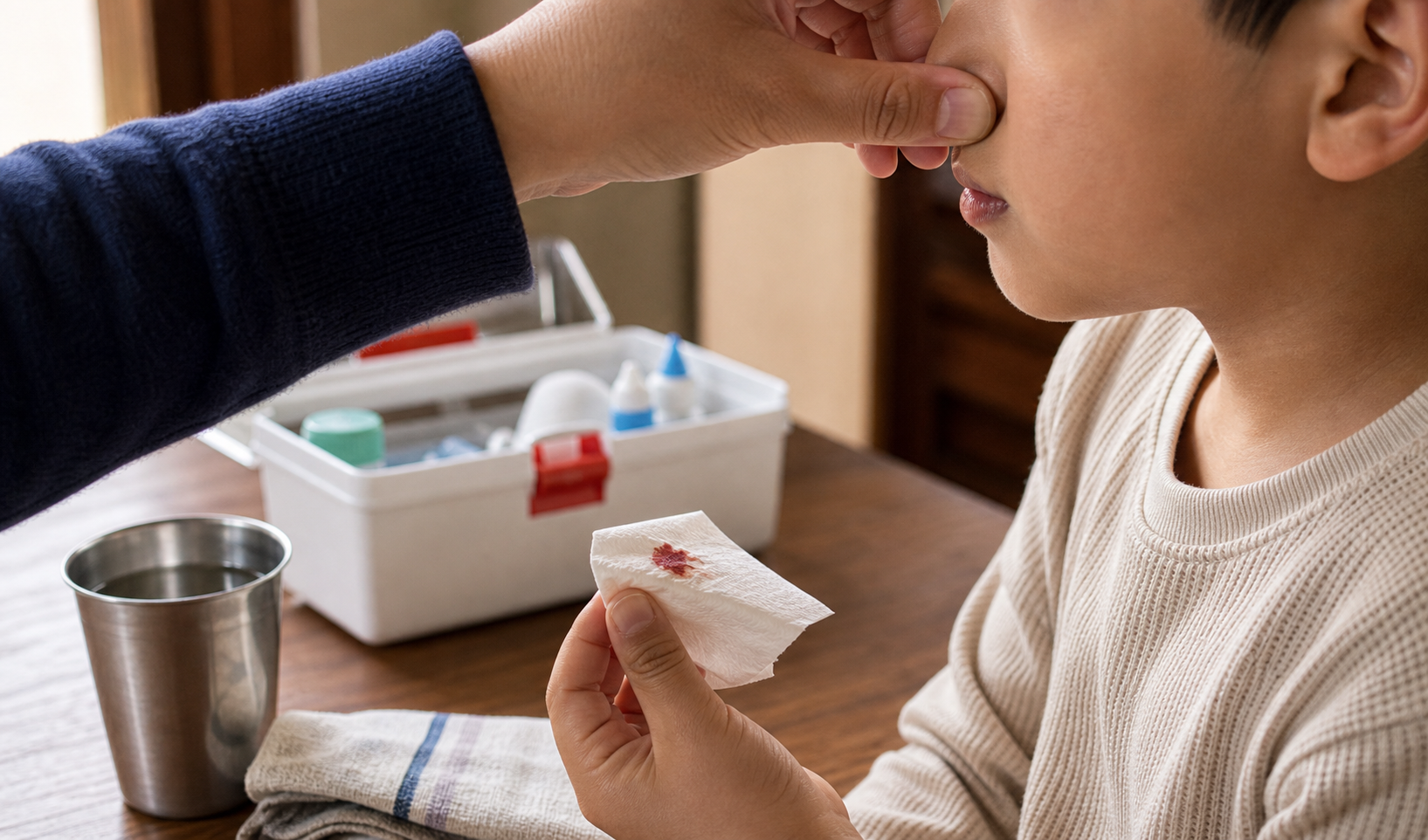
Short answer: For a nosebleed, make the child sit up, lean forward, pinch the soft part of the nose continuously for 10 minutes, and do not make the child lie down or tilt the head backward.
Why Children Get Nosebleeds
Nosebleeds are common in children because the front part of the nose has a rich blood supply and the lining is easily injured. Most bleeding comes from the front of the nose and stops with proper pressure.
In Nepal, I commonly see nosebleeds after colds, nose picking, dry weather, allergic rhinitis, forceful blowing, minor trauma, and sometimes after children put fingers or objects inside the nose.
Correct First Aid
| Step | What to do |
|---|---|
| 1 | Sit the child upright. |
| 2 | Make the child lean slightly forward. |
| 3 | Pinch the soft part of the nose, not the bony bridge. |
| 4 | Hold pressure continuously for 10 minutes. Do not keep checking. |
| 5 | If still bleeding, repeat once for another 10 minutes and seek care if it continues. |
Common Mistakes
- Tilting the head backward: blood goes into the throat and may cause vomiting.
- Pinching the bony part: pressure does not reach the bleeding area.
- Checking every minute: this breaks the clot and bleeding restarts.
- Stuffing random materials deep into the nose: this can injure the lining.
When to See a Doctor
- Bleeding does not stop after two proper 10-minute pressure attempts.
- Nosebleed follows significant injury.
- Bleeding happens frequently or from both sides.
- There is bleeding from gums, blood in urine/stool, or easy bruising.
- The child looks pale, weak, dizzy, or breathless.
- The child is taking aspirin, anticoagulants, or has a known bleeding disorder.
- There is foul-smelling discharge from one nostril, suggesting a foreign body.
How to Reduce Recurrence
For recurrent simple nosebleeds, the usual approach is to reduce dryness and trauma.
- Treat allergic rhinitis if the child has sneezing, itching, blocked nose, or mouth breathing.
- Trim nails and discourage nose picking.
- Use saline drops/spray if the nose is very dry.
- Avoid forceful nose blowing.
- Keep the child hydrated.
When We Think Beyond a Simple Nosebleed
Most cases are local nasal bleeding. But if a child has repeated bleeding, bruises, gum bleeding, heavy bleeding after minor injury, family history of bleeding disorder, or pallor, we should check further.
In that situation, doctors may consider CBC, platelet count, PT/INR, aPTT, peripheral smear, and other tests depending on examination.
My Take
The best treatment for most nosebleeds is not a dramatic medicine. It is correct pressure for enough time. Parents should learn this before panic starts.
Sources Checked
No spam. Just a short email when I publish something new.