
Updated: May 2026
Few things scare parents more than seeing a child convulse during fever. Most simple febrile seizures are not epilepsy, but the first episode still deserves proper evaluation.
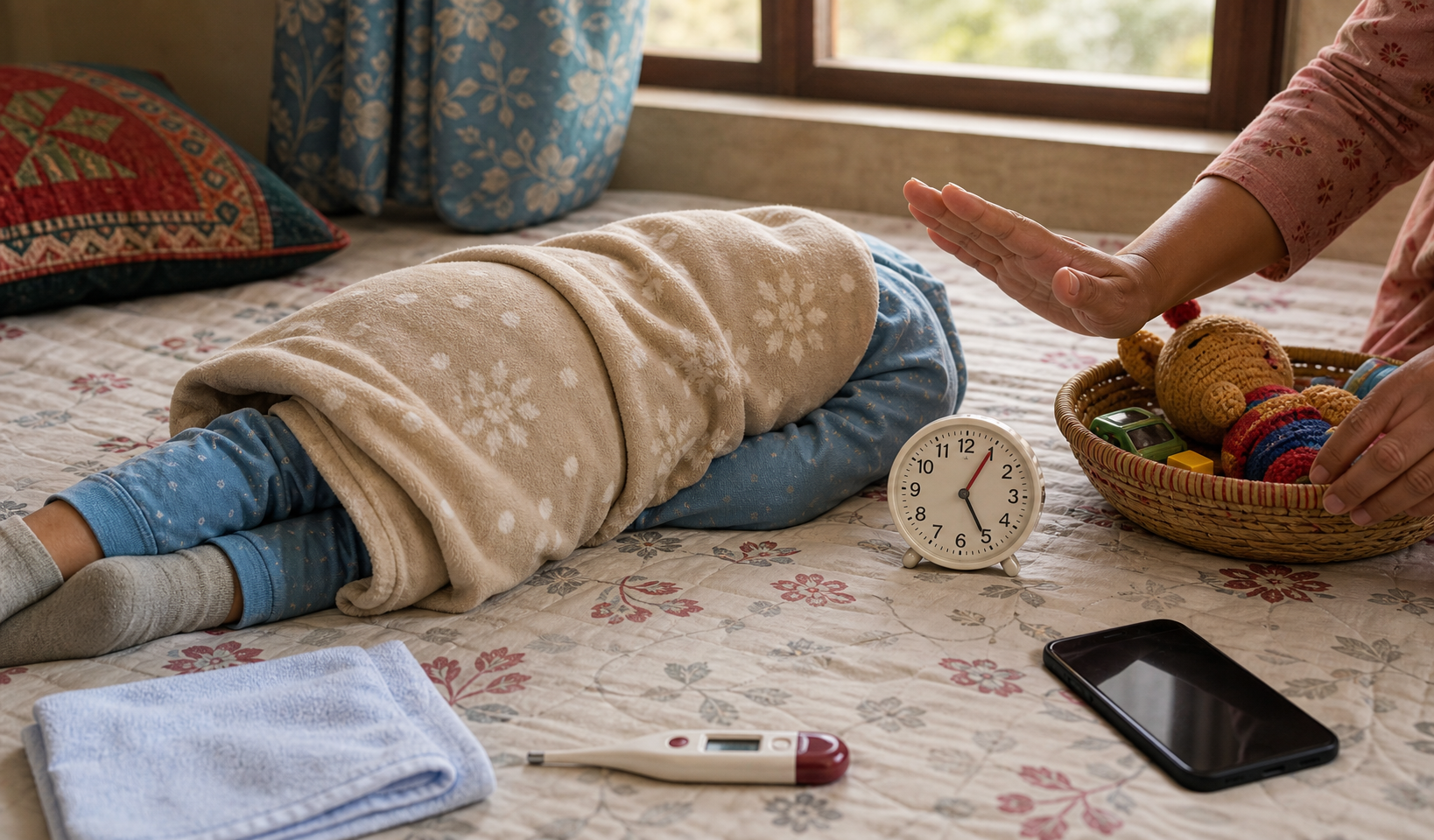
Short answer: A febrile seizure is a seizure triggered by fever, usually in children between 6 months and 5 years. During the seizure, keep the child safe, turn the child to the side, do not put anything in the mouth, note the time, and seek medical care.
What Is a Febrile Seizure?
A febrile seizure happens when a young child has a seizure associated with fever, without evidence of a brain infection, previous afebrile seizures, or another clear seizure-provoking cause.
It commonly happens early in an illness, sometimes before parents even realize the child has fever. That is why parents often say, “The fever was not even very high.” The speed of rise of temperature may matter more than the absolute number.
What It Looks Like
- The child may suddenly become stiff or floppy.
- Arms and legs may jerk rhythmically.
- Eyes may roll upward.
- The child may not respond during the episode.
- There may be saliva, noisy breathing, or brief bluish discoloration.
- After the seizure, the child may be sleepy or confused for some time.
What Parents Should Do Immediately
| Do this | Why |
|---|---|
| Place the child on the floor or bed away from sharp objects | Prevents injury |
| Turn the child to one side | Helps saliva/vomit drain safely |
| Note the time the seizure starts | Duration changes urgency and treatment |
| Loosen tight clothing | Helps breathing and comfort |
| Go to hospital after the first episode | The cause of fever must be checked |
What Not to Do
- Do not put a spoon, finger, cloth, onion, or water into the mouth.
- Do not try to force the child’s arms and legs to stop jerking.
- Do not slap, shake, or pour water on the child.
- Do not give oral medicine during the seizure.
- Do not assume every seizure with fever is harmless.
When It Is an Emergency
Go to emergency care urgently if:
- The seizure lasts more than 5 minutes.
- The child has repeated seizures in the same illness.
- The seizure affects only one side of the body.
- The child remains unconscious, very drowsy, or abnormal after the episode.
- The child is younger than 6 months or older than 5 years.
- There is neck stiffness, persistent vomiting, severe headache, rash, breathing difficulty, or signs of meningitis/encephalitis.
Does Fever Medicine Prevent Febrile Seizures?
Paracetamol or ibuprofen can make the child more comfortable, but they do not reliably prevent febrile seizures. Parents should still treat fever for comfort, hydration, and monitoring, but not feel guilty if a seizure happens despite fever medicine.
Will My Child Have Epilepsy?
Most children with simple febrile seizures do not develop epilepsy. The risk is higher when seizures are complex, prolonged, focal, recurrent, associated with developmental problems, or there is a family history of epilepsy. This is why proper clinical assessment matters.
My Take
In Nepal, many harmful practices still happen during seizures because families panic. The most important education is simple: side position, nothing in the mouth, time the seizure, reach care.
A febrile seizure is frightening, but calm first aid prevents injury and helps doctors make better decisions.
Sources Checked
No spam. Just a short email when I publish something new.