
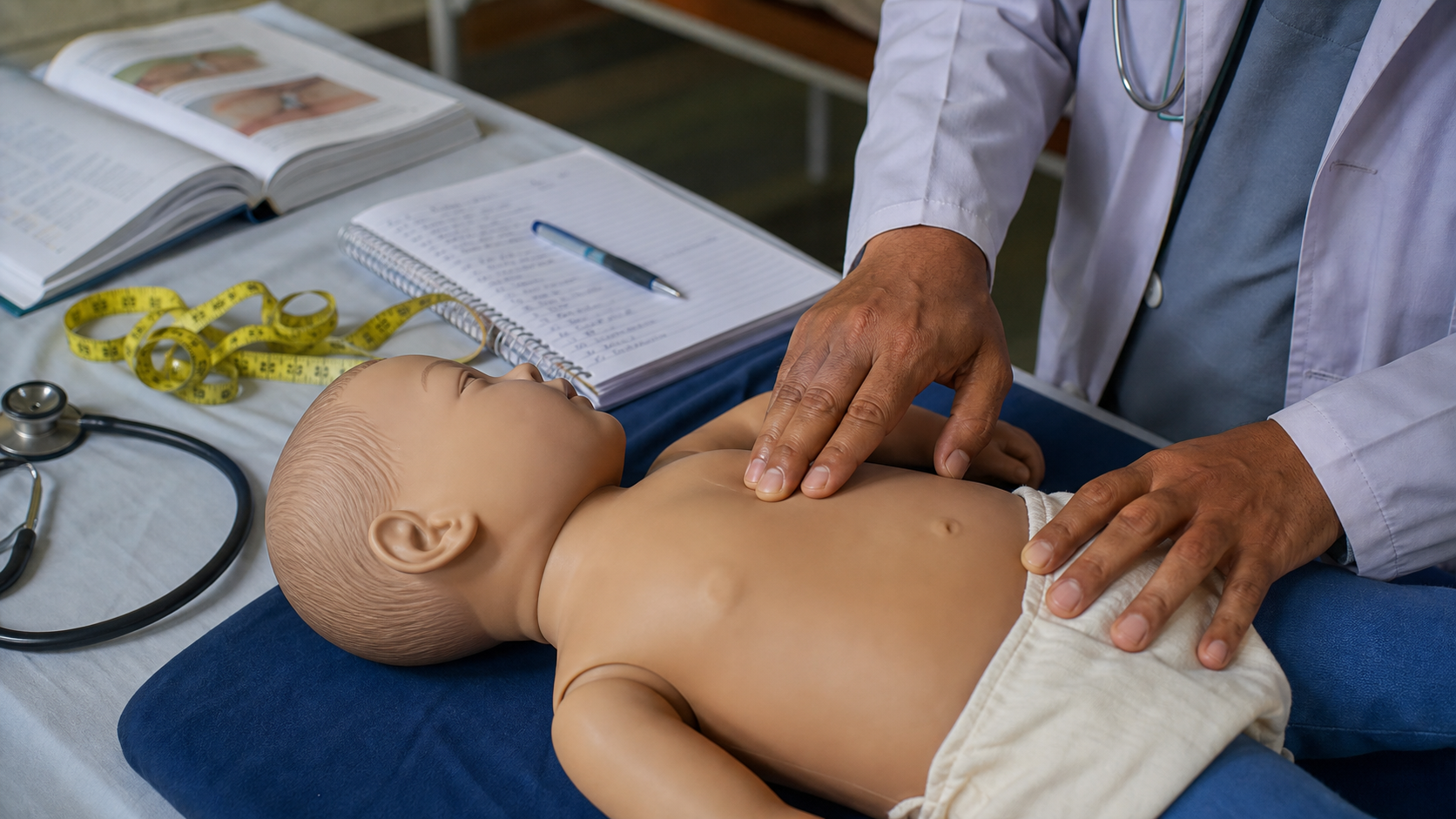
The Approach to a Child With Organomegaly
A structured pediatric approach to hepatomegaly, splenomegaly and hepatosplenomegaly for exams and ward practice.
Read noteArchive
Approach to patients suffering from various symptoms.
A structured pediatric approach to hepatomegaly, splenomegaly and hepatosplenomegaly for exams and ward practice.
Read noteGAIT The pattern of how a person walks A dynamic & repetitive performance Occurs with a definite rhythmic sequence of events that takes during a gait cycle Normal walking is relatively effortless, performed with minimum expenditure of energy GAIT CYCLE The walking sequence requires that the non weight bearing leg moves forward while weight is…
Read noteDiarrhea- Excessive loss of fluid & electrolyte in the stool. Passage of 3 or more loose or watery stool in a 24 hour period. Loose stool- That would take the shape of a container. For practical purpose, the recent change in consistency & character of the stool & its water content. Types of Diarrhea Acute…
Read noteBleeding/bruising in children: Accidental Non-accidental injury/Abuse Bleeding diathesis Common Causes of bleeding in a well child ITP Henoch-Schonlein purpura Hemophilia A or B von Willebrand disease Vitamin K deficiency Warfarin or heparin Causes of bleeding in a Sick child DIC Severe liver dysfunction Acute leukemia Neuroblastoma Lymphoma Meningococcal infection History Site of bleeding Localized:…
Read noteHistory duration of weakness (ie. hours to days to weeks/months) classify as rapidly progressive, acute, subacute or chronic mode of progression (eg. onset in arms, “ascending paralysis”) sensory involvement (numbness, tingling, loss of balance esp. in dark, pain/burning) bulbar involvement (change in voice or swallowing) facial weakness (trouble chewing, sucking with straw, blowing) extraocular muscle…
Read noteDefinition Physical growth is significantly less than that of his/her peers Usually refers to growth below the 3rd or 5th percentile or a change in growth that has crossed two major growth percentile(i.e., from above the 75th percentile to below the 25th )in a short time. FTT Criteria Height/Weight less than 3rd to 5th percentile…
Read noteCauses of Floppy Infant Central nervous system: Perinatal asphyxia, neonatal encephalopathy, cerebral palsy, intracranial hemorrhage, chromosomal anomalies including down syndrome and inborn errors of metabolism e.g., aminoacidurias, mucopolysaccharidosis, and cerebral lipidosis. Spinal cord lesions: Anterior horn cell disease – Werdnig Hoffman disease, poliomyelitis. Peripheral nervous: Acute polyneuropathy, familial dysautonomia, congenital sensory neuropathy. Myoneural junction: Neonatal myasthenia gravis, infantile botulism,…
Read note