
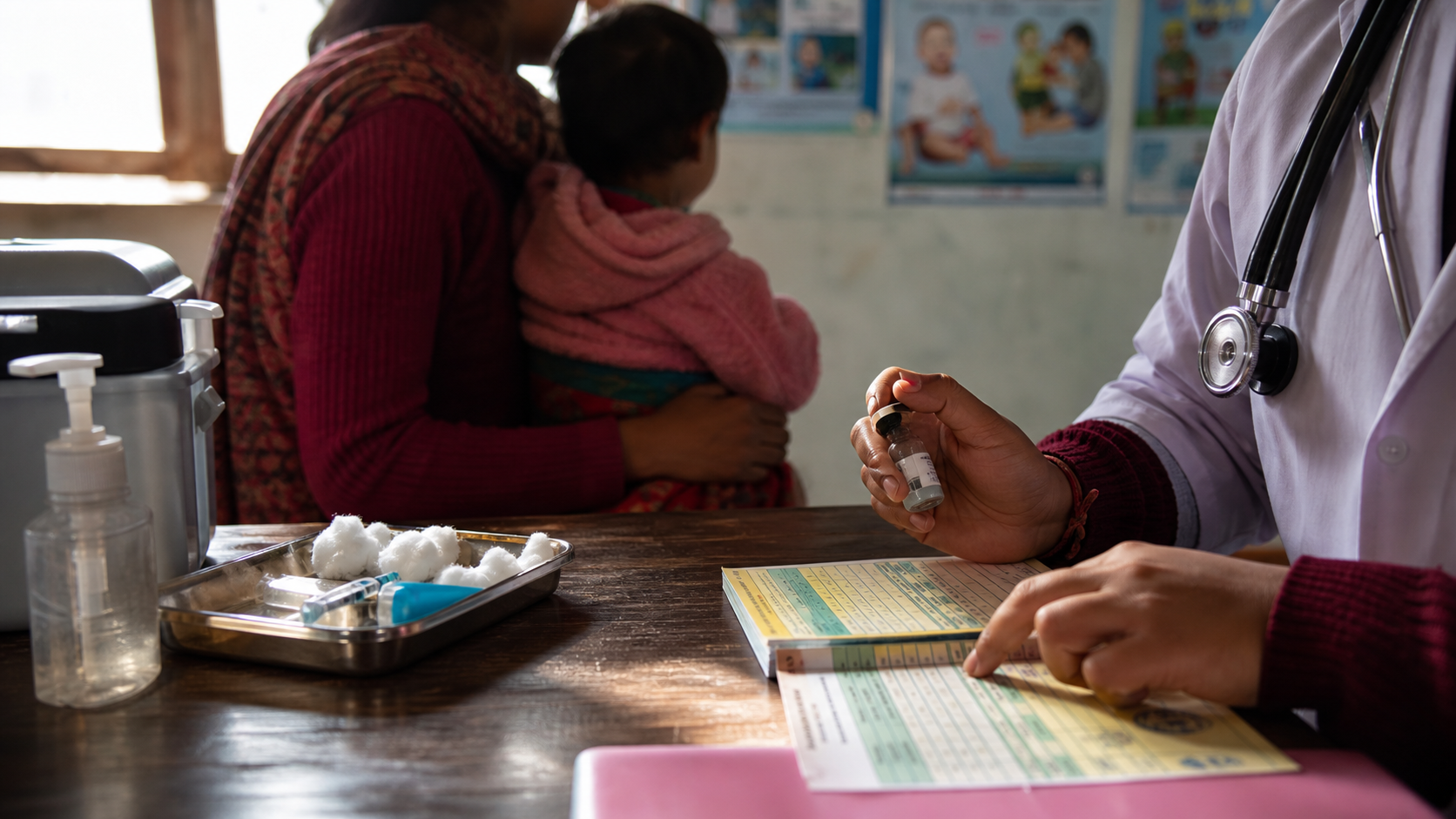
One of the hardest truths in pediatrics is that many children do not die from mysterious diseases.
They die from things we already know how to prevent, recognize, or treat: pneumonia, diarrhea, sepsis, malnutrition, vaccine-preventable infections, neonatal complications, poisoning, drowning, delayed referral, and diseases that become dangerous because the child reached care too late.
This is not a post blaming parents. Most parents do not delay because they do not care. They delay because symptoms are confusing, money is limited, transport is hard, local care may be inadequate, and the health system often expects families to make perfect decisions under pressure.
The Problem Is Not Only Knowledge
Health education matters, but it is not enough. A mother may know that fast breathing is dangerous, but still live hours away from a hospital. A father may know a vaccine is needed, but the child may have missed a session because of migration, illness, lockdown disruption, or lack of clear follow-up. A family may reach a clinic early, but the child may still be referred late.
Preventable deaths usually happen when several small failures line up.
Where Children Get Lost
- At home: danger signs are missed, or the family tries home remedies first.
- At the pharmacy: antibiotics, cough syrups, steroids or painkillers may be given without proper assessment.
- At the first health facility: severity may be underestimated, or referral may be delayed.
- During transport: there may be no oxygen, no monitoring, no money, and no reliable ambulance.
- At the referral hospital: beds, blood products, ICU care, tests, or medications may not be immediately available.
Vaccines Are Still One of the Clearest Wins
Nepal’s immunization program has saved many lives. But outbreaks of measles, Japanese encephalitis and other vaccine-preventable diseases show that gaps remain. Even a small pocket of missed children can become enough for an outbreak when the disease is highly contagious.
COVID-19 also disrupted routine immunization globally and locally. Missed vaccine visits do not always cause consequences immediately. Sometimes the effect appears later, as outbreaks.
Referral Delay Is a Pediatric Emergency
Children compensate until they suddenly cannot. A child who looks “not too bad” in the morning can be in shock by evening. This is why danger signs matter so much: fast breathing, poor feeding, lethargy, convulsions, persistent vomiting, dehydration, blue lips, severe pain, reduced urine, or a parent saying “this child is not normal.”
In pediatrics, delay is not neutral. Delay changes prognosis.
What Can Actually Help
- Better parent education around danger signs, not just disease names.
- Reliable vaccine tracking and catch-up systems.
- Stronger primary care assessment and earlier referral.
- Less casual antibiotic and steroid use without diagnosis.
- Transport systems that can actually support a sick child.
- More honest communication with families about when to return urgently.
Preventable pediatric deaths are not prevented by one lecture or one poster. They are prevented when families, health workers, pharmacies, ambulances, hospitals, vaccines, oxygen, antibiotics, blood, and referral systems work together.
That is the difficult part. But it is also the part we have to keep talking about.
What Families Can Do Immediately
- Keep the child’s vaccine card safely and bring it to every visit.
- Ask about catch-up vaccination if any dose was missed.
- Do not wait at home if a young child has fast breathing, poor feeding, repeated vomiting, convulsion, lethargy, blue lips, or very reduced urine.
- Use ORS early for diarrhea, but do not delay care if dehydration signs appear.
- Avoid buying antibiotics repeatedly without assessment. A partially treated child can become harder to diagnose later.
What Health Workers Should Keep Repeating
Families remember simple danger signs better than long disease lectures. Instead of only saying “come if worse,” we should say exactly what worse means: breathing fast, chest indrawing, not feeding, convulsion, drowsiness, dehydration, persistent fever, or a parent’s feeling that the child is not normal.
Good counseling is also prevention. A parent who knows when to return can save hours. In pediatrics, hours matter.
The Common Pattern I Keep Seeing
A child usually does not arrive as a textbook emergency on day one. The story often begins with fever, cough, loose stool, poor feeding, or mild lethargy. The first decision is made at home. The second is often made at a pharmacy or local clinic. Only later, when the child stops feeding, starts breathing fast, becomes drowsy, has seizures, or develops shock, the family rushes to a larger hospital.
By then, the disease has had time. Pneumonia has progressed. Dehydration has worsened. Sepsis has become harder to reverse. Dengue has reached the critical phase. A malignancy has been labelled as rheumatologic pain or weakness. A vaccine-preventable disease has already spread to other children.
Why Prevention Fails Even When Knowledge Exists
Prevention is not just telling parents to vaccinate or come early. In real life, a mother may be working, the father may be abroad, the vaccine card may be lost, the family may have migrated, the health post may be far, or the child may have been sick on vaccine day and never caught up.
For poorer families, one hospital visit is not only a medical decision. It is transport cost, food cost, missed wages, fear of admission bills, and uncertainty about whether the visit will actually help. That is why advice must be realistic. “Come early” is correct, but incomplete unless the system makes early care accessible.
Vaccine Gaps Are Not Small When the Disease Is Contagious
Measles is the clearest example. It does not need a large gap to return. A few clusters of unvaccinated or under-vaccinated children can create an outbreak. In border areas, population movement between Nepal and India adds another layer of risk. Viruses do not care where the administrative line is.
This is why catch-up vaccination matters. A missed dose is not a moral failure by parents. It is a fixable risk. Every visit to a clinic should be a chance to check the vaccine card.
What I Wish Every Parent Knew
- Fast breathing in a child is not “just weakness.”
- A child who cannot drink or breastfeed needs urgent assessment.
- Convulsion with fever may be benign, but the first episode still needs evaluation.
- Repeated vomiting and no urine are danger signs.
- Antibiotics are not fever medicine.
- Vaccine delay should be corrected, not ignored.
- If your instinct says the child is not normal, say that clearly to the health worker.
What I Wish We Did Better as a System
We need stronger first-contact care. We need better triage. We need pharmacies to stop becoming the unofficial first doctor for every sick child. We need referral notes that say why the child is being referred, not only “refer to higher center.” We need oxygen and antibiotics available where they are supposed to be available. We need transport that does not turn a sick child into a gamble.
Preventable deaths are rarely prevented by one heroic doctor at the end. They are prevented by many boring systems working before the child collapses.
High-Yield Facts for Nepal
| Preventable problem | What helps | Where children are lost |
|---|---|---|
| Pneumonia | Vaccination, early recognition of fast breathing/chest indrawing, oxygen, antibiotics when indicated. | Home delay, pharmacy treatment, late oxygen/referral. |
| Diarrhea/dehydration | ORS, zinc, breastfeeding, safe water, danger-sign recognition. | Late care after reduced urine/lethargy/shock. |
| Measles/JE/other VPDs | Routine immunization and catch-up. | Missed doses, migration, outbreak pockets, cross-border movement. |
| Neonatal illness | Skilled delivery, early feeding, infection recognition, jaundice follow-up. | First-week delay and under-recognition of danger signs. |
Data and News Angle
Nepal has improved child survival over decades, but preventable deaths persist because the last mile is difficult: geography, cost, transport, late referral, nutrition, vaccine gaps and uneven quality of first-contact care. Recent measles outbreaks and routine immunization gaps after COVID-19 show how quickly progress can become fragile.
What Would Make This Post Stronger
Add one short real ward memory: a preventable illness that became severe because the child arrived late. Keep it anonymous. That will make this more powerful than a generic public health essay.
Recent Nepal Examples: This Is Not Theoretical
| Year/date | Event | What happened | What controlled or reduced risk |
|---|---|---|---|
| January 2023 | Measles outbreak, Nepalgunj, Banke | WHO reported that an outbreak was confirmed on 2 January 2023 in Nepalgunj Sub-Metropolitan City after a cluster of fever-rash cases. | Active case search, mobilization of local health workers, WHO/UNICEF support, community counselling, and outbreak response immunization. |
| 2023 campaign response | Measles-rubella vaccination response | UNICEF regional reporting described Nepal vaccinating 1,866,202 children aged 6 months to 15 years in response to measles outbreak risk. | Mass MR vaccination campaign and social-behaviour communication. |
| September 2024 | Japanese encephalitis spread across Nepal | Kathmandu Post reported 12 deaths and 59 infections by 12 September 2024; the national annual health report later listed 109 confirmed JE cases and 23 deaths for 2024 surveillance data. | Surveillance, vaccination programme review, vector control, public awareness and mosquito-bite prevention. |
| August 2025 | Nepal verified for rubella elimination | WHO announced Nepal had eliminated rubella, a major positive milestone. | Long-term routine immunization, campaigns, surveillance and community health worker effort. |
These examples show both sides of Nepal’s child-health story. We can eliminate rubella, but measles can still return when pockets of children are missed. JE vaccine exists, but outbreaks still remind us that surveillance and coverage must continue. Prevention works, but only if it reaches the child before the disease does.
COVID-19 After-Effect
COVID-19 disrupted routine health services globally, including immunization. The effect is not always immediate. A missed vaccine dose in 2020 or 2021 can become an outbreak risk later when enough susceptible children accumulate. This is why catch-up vaccination is not a small administrative task. It is outbreak prevention.
Cross-Border Risk
Nepal shares an open border with India, and families move for work, school, marriage, treatment and trade. For measles and other vaccine-preventable diseases, borders are not biological barriers. If either side has under-immunized pockets, both sides remain vulnerable. This is especially relevant in Tarai districts and high-mobility communities.
Added Sources for Outbreak Context
- WHO Disease Outbreak News: Measles in Nepal, 2023
- WHO Nepal: responding to measles outbreak in Nepalgunj
- UNICEF Nepal: Nepalgunj measles response story
- UNICEF South Asia humanitarian situation report 2023
- Kathmandu Post: JE spread across Nepal, September 2024
- Nepal Annual Health Report 2080/81: AES/JE surveillance data
- WHO South-East Asia: Nepal eliminates rubella, August 2025
Sources and Useful Links
- UNICEF Nepal: health and nutrition
- WHO: child health
- WHO: vaccines and immunization
- Nepal DHS program country reports
Sources and Further Reading
- WHO: child health
- UNICEF Nepal: health and nutrition
- WHO: immunization
- CDC: signs of dehydration in children
No spam. Just a short email when I publish something new.