
Organomegaly is one of the classic pediatric long case findings. It can be simple, but it can also represent serious disease: infection, hemolysis, malignancy, storage disease, chronic liver disease, portal hypertension, heart failure or systemic illness.
The key is to approach it systematically.
First: Which Organ Is Enlarged?
- Hepatomegaly: liver enlarged
- Splenomegaly: spleen enlarged
- Hepatosplenomegaly: both liver and spleen enlarged
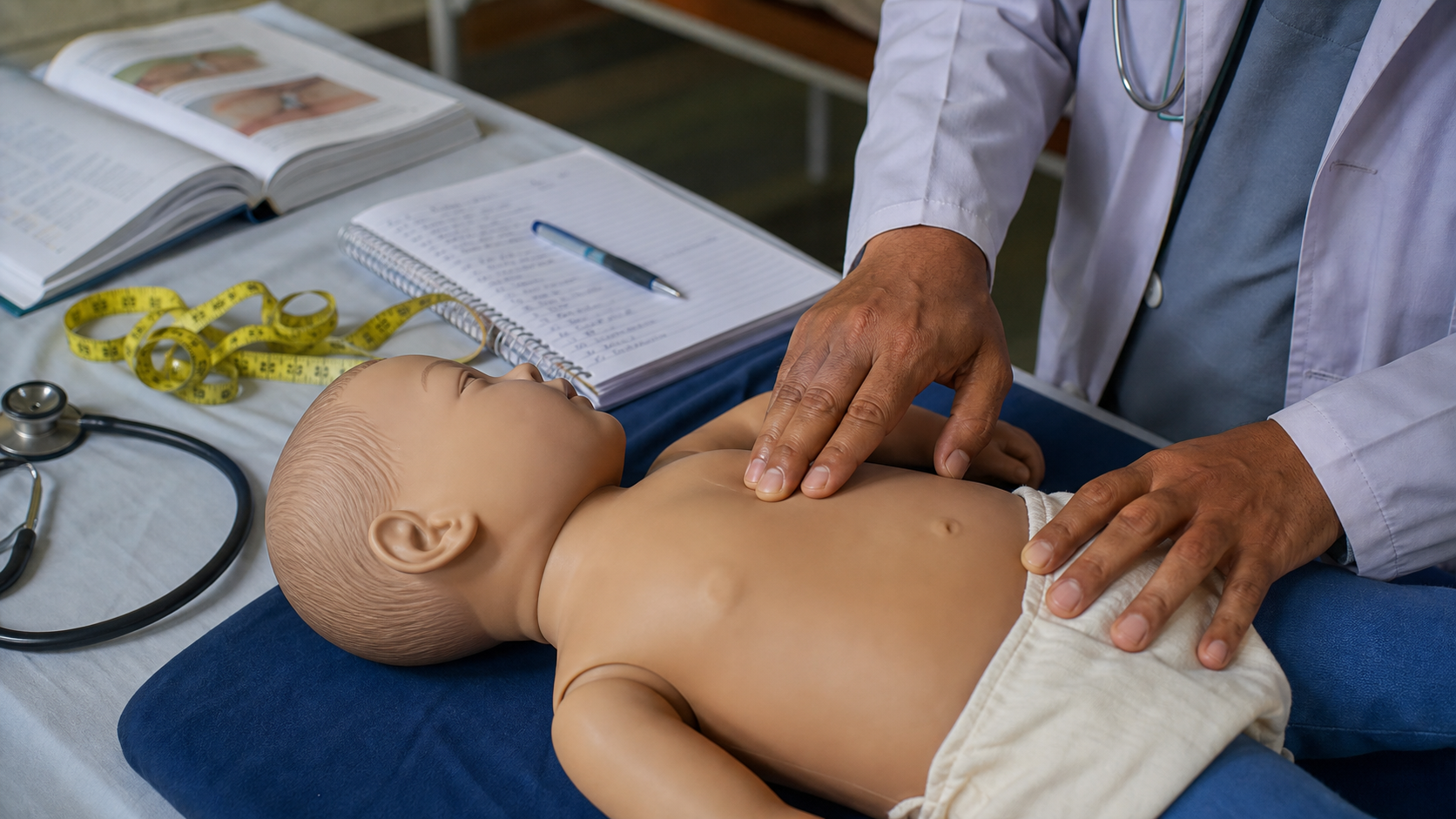
Confirm by proper examination. Percuss, palpate from the right iliac fossa for liver, and from the right iliac fossa toward the left costal margin for spleen. Do not call every abdominal fullness organomegaly.
Important History
- Fever duration and pattern
- Weight loss, night sweats, anorexia
- Pallor, jaundice, bleeding, bruising
- Recurrent infections
- Abdominal distension or pain
- Dark urine or pale stool
- Past transfusion
- TB contact
- Travel or malaria exposure
- Family history of anemia, liver disease, sibling death or consanguinity
- Developmental delay or regression
Examination Clues
- Pallor: anemia, hemolysis, leukemia, chronic disease
- Icterus: hemolysis, hepatitis, chronic liver disease
- Lymphadenopathy: infection, lymphoma, leukemia
- Bleeding signs: thrombocytopenia, liver disease, leukemia
- Edema/ascites: liver disease, nephrotic syndrome, heart failure
- Dysmorphism/coarse facies: storage disorders
- Growth failure: chronic disease
Useful Differential Framework
Fever + hepatosplenomegaly
Think infections: malaria, enteric fever, kala-azar where relevant, EBV/CMV, TB, sepsis, viral hepatitis.
Pallor + splenomegaly
Think hemolytic anemia, thalassemia, hereditary spherocytosis, leukemia, hypersplenism.
Massive splenomegaly
Think chronic hemolysis, portal hypertension, kala-azar, chronic myeloid leukemia, storage disease.
Hepatomegaly + edema/ascites
Think chronic liver disease, heart failure, nephrotic syndrome with abdominal distension, severe malnutrition.
Developmental delay + organomegaly
Think storage disorders and metabolic disease.
First-Line Investigations
- CBC with differential and peripheral smear
- Reticulocyte count if anemia/hemolysis suspected
- LFT, bilirubin, albumin, PT/INR
- RFT and urine routine
- ESR/CRP depending on context
- Viral markers or infectious workup guided by history
- Ultrasound abdomen
- Chest X-ray if TB, malignancy or systemic illness suspected
Red Flags
- Severe pallor or bleeding
- Persistent fever with weight loss
- Generalized lymphadenopathy
- Very large spleen
- Failure to thrive
- Abnormal peripheral smear/blasts
- Signs of chronic liver disease
In exams, do not only list causes. Show the examiner that you can connect the organomegaly to the child’s age, symptoms, nutrition, geography, examination findings and basic labs.
How to Present Organomegaly in Exams
Do not just say “liver is enlarged.” Describe it properly:
- How many cm below costal margin
- Span if assessed
- Consistency: soft, firm, hard
- Surface: smooth or nodular
- Margin: sharp or rounded
- Tenderness
- Pulsatility if relevant
- Associated ascites or signs of chronic liver disease
For spleen, mention size below costal margin, direction of enlargement, notch if felt, consistency, tenderness, and whether it crosses the midline.
Age-Based Thinking
- Infant: congenital infections, metabolic/storage disease, hemolysis, liver disease.
- School-age child: infections, hemolytic anemia, leukemia/lymphoma, chronic liver disease.
- Adolescent: hematologic malignancy, chronic infection, autoimmune/liver disease depending on presentation.
One Practical Rule
When organomegaly comes with pallor, fever, weight loss, lymph nodes, bleeding or abnormal CBC, think beyond simple infection. Look carefully for malignancy and hemolytic disease.
Common Exam Differentials by Pattern
Hepatomegaly alone
Think hepatitis, congestive cardiac failure, storage disease, infiltrative disease, fatty liver, malignancy, or chronic liver disease depending on age and signs.
Splenomegaly alone
Think hemolytic anemia, malaria, kala-azar in relevant regions, portal hypertension, lymphoma/leukemia, storage disease, or chronic infection.
Hepatosplenomegaly with fever
Think infection first, but do not forget malignancy. Fever plus pallor plus organomegaly plus bone pain or bleeding should make leukemia enter the differential early.
Hepatosplenomegaly with jaundice
Think hemolysis, hepatitis, chronic liver disease, biliary disease, or infection. Stool and urine color become important. So do pallor, reticulocyte count, bilirubin fraction and liver enzymes.
What Ultrasound Can and Cannot Do
Ultrasound can confirm organ size, texture, ascites, portal vein changes, focal lesions and lymph nodes. But it does not replace clinical reasoning. A report saying hepatosplenomegaly is the beginning, not the diagnosis.
When to Think of Malignancy
- Persistent unexplained fever
- Weight loss
- Bone pain or limp
- Bleeding/bruising
- Generalized lymphadenopathy
- Cytopenias or blasts on smear
- Very high LDH or uric acid if tested
How to Finish the Case
End with a plan that fits your top differential. If you suspect leukemia, do not talk only about liver function. If you suspect portal hypertension, mention variceal bleeding risk and chronic liver disease workup. If you suspect hemolysis, mention smear, retic count, bilirubin and family screening.
Bedside Differentiation: Liver vs Spleen
Students sometimes confuse a large spleen with a left-sided abdominal mass. The spleen usually enlarges diagonally toward the right iliac fossa, may have a notch, moves with respiration, and you cannot get above it. The kidney is usually ballotable and you may be able to get above it. These bedside details still matter in exams.
Do Not Forget Growth and Nutrition
Organomegaly in a child with severe wasting, stunting or chronic illness has a different meaning from organomegaly in a well-grown child with acute fever. Always connect organ findings with anthropometry, nutrition, development and chronicity.
Pattern-Based Table
| Pattern | Think first | Do not miss |
|---|---|---|
| Fever + hepatosplenomegaly | Infection: enteric fever, malaria, EBV/CMV, TB, kala-azar where relevant. | Leukemia/lymphoma. |
| Pallor + splenomegaly | Hemolysis, thalassemia, hypersplenism. | Acute leukemia. |
| Jaundice + hepatomegaly | Hepatitis, hemolysis, liver disease. | Acute liver failure/cholestasis. |
| Development delay + organomegaly | Storage/metabolic disease. | Progressive neurodegenerative disease. |
Recent Advances and Availability
In Nepal, first-line workup usually relies on good examination, CBC/smear, LFT, bilirubin, PT/INR, ultrasound and targeted infectious testing. Developed centers may add enzyme assays, genetic panels, advanced imaging, flow cytometry and metabolic workup earlier. For exams, mention advanced tests only after you have built the basic clinical logic.
News/Data Context
Nepal’s pediatric organomegaly differential is shaped by infections, hemoglobinopathies, malnutrition, TB, malignancy and delayed presentation. Imported textbook probability is not enough; local epidemiology matters.
Sources and Useful Links
Investigation Strategy by Suspected Category
| Suspected group | Useful tests | Reason |
|---|---|---|
| Hemolysis | CBC, smear, retic count, bilirubin, LDH, Coombs, Hb electrophoresis. | Confirms anemia pattern and inherited/acquired hemolysis. |
| Infection | CBC, cultures if sick, malaria test, viral markers, TB workup, region-specific tests. | Guided by fever pattern and geography. |
| Malignancy | CBC/smear, LDH, uric acid, CXR, marrow/flow if indicated. | Looks for leukemia/lymphoma and tumor burden. |
| Liver/portal hypertension | LFT, bilirubin, albumin, PT/INR, ultrasound Doppler. | Assesses synthetic function and portal system. |
Exam Closing Line
“In this child, organomegaly is most likely due to ___ because ___; however, I would urgently rule out ___ because missing it would change immediate management.”
Common Viva Questions
- How do you differentiate hepatomegaly from a right renal mass?
- What are causes of massive splenomegaly in a child?
- What are signs of portal hypertension?
- How will you evaluate pallor with splenomegaly?
- When do you suspect leukemia?
- What investigations will you send first and why?
Answering these well requires anatomy, examination technique and clinical reasoning together. Do not memorize organomegaly as only a cause list.
Practical Ward Rule
Any child with unexplained organomegaly plus persistent fever, pallor, bruising, lymphadenopathy, weight loss, bone pain or abnormal CBC deserves urgent senior review. Waiting for every outpatient test before escalating can be unsafe.
One Common Trap
Do not call every palpable liver pathological. In children, the liver edge may be palpable depending on age and body habitus. Always interpret size, span, consistency, tenderness, associated findings and the clinical story together.
In Nepal, organomegaly should also make you think about diseases that are locally relevant: enteric fever, malaria exposure in travel history, kala-azar in the right epidemiological setting, TB, hemoglobinopathies, and delayed malignancy presentations.
No spam. Just a short email when I publish something new.